I read this PDF yesterday and it has some very cool things to say about the Canon of literature. Essentially they map authors in a 2D space where the x-axis is popularity on Goodreads and the y-axis is number of citations in MLA papers: https://litlab.stanford.edu/LiteraryLabPamphlet17.pdf
You can define a quadrant system with lines at the xy medians:
- NE - prestigious but not popular: academic darlings
- NW - prestigious and popular: the sweet spot
- SW - popular but not prestigious: genre fiction, guilty pleasures
- SE - neither: unknowns, undesirables, the forgotten
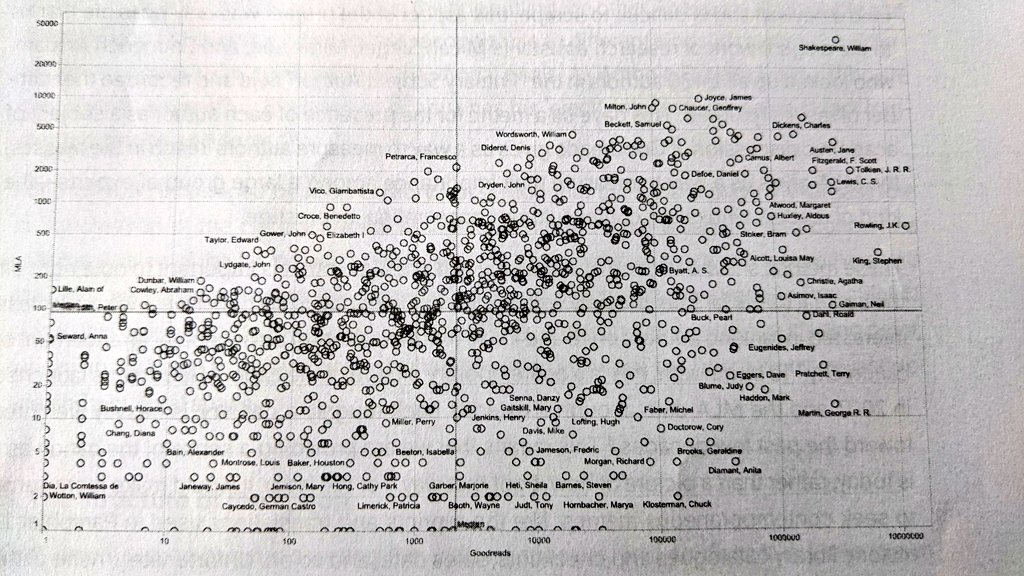
This canonicity is fractal: if you zoom in on the top right corner, the same dynamics are at play. Even at double zoom, look at the author names:
- NE: Milton, Joyce, Beckett
- NW: Shakespeare, Dickens, Austen
- SW: Rowling, Orwell, Salinger
- SE: DeLillo, Roth, Rushdie 💀💀💀
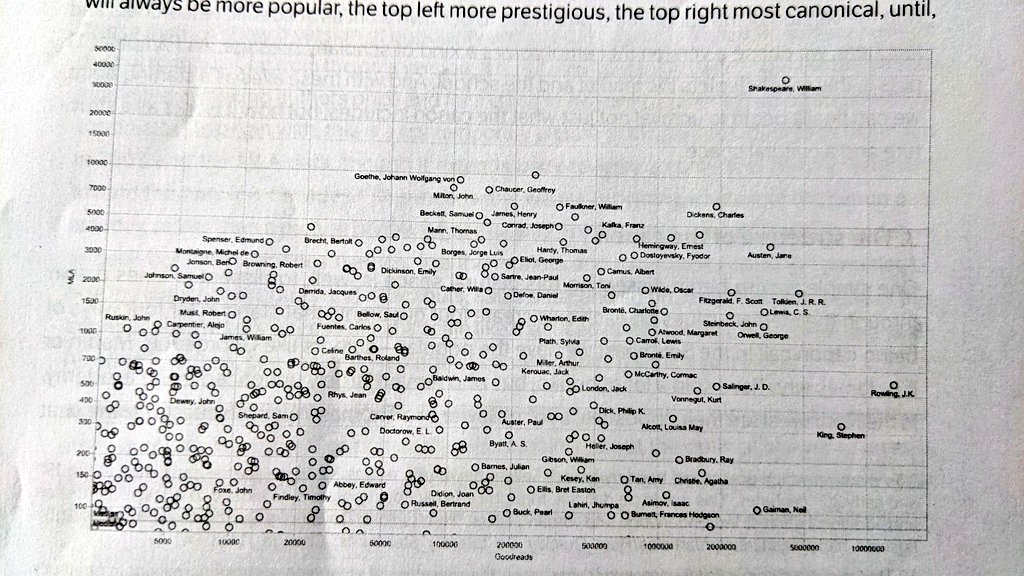
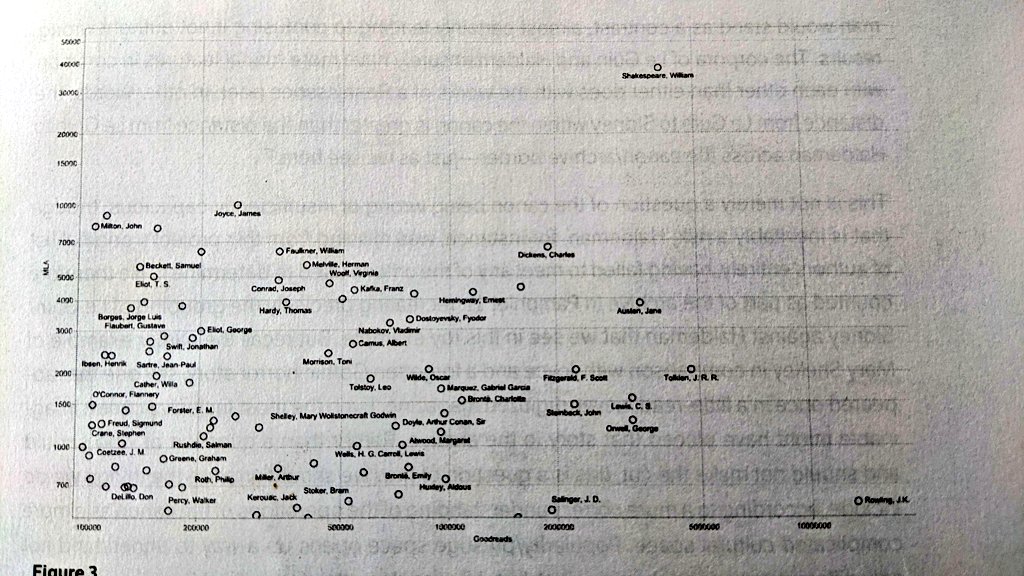
Oops, I forgot I’m bad at East and West. Maybe delete these or something.
Nah, on second thought, forget it. This is philosophy now. I’m defining my own terms. Here’s a key:
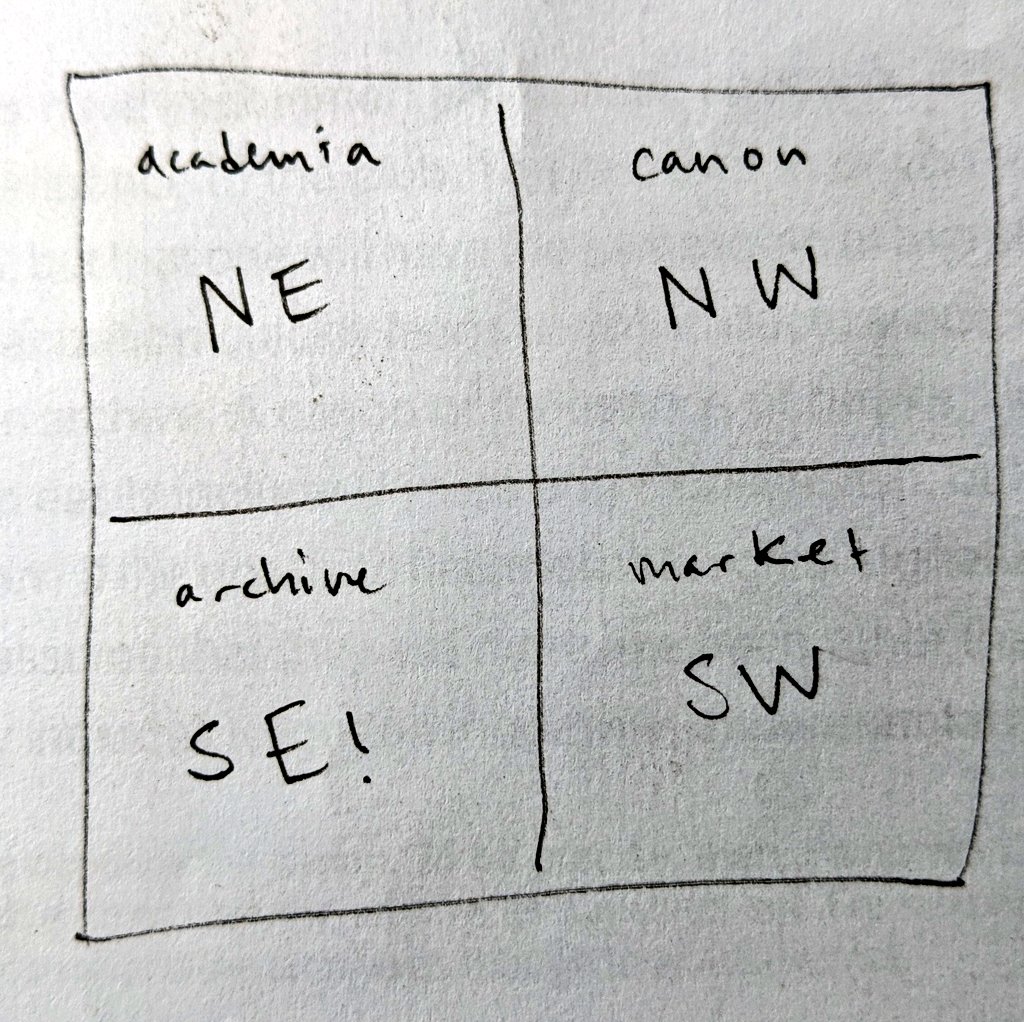
Should have used Lawful/Chaotic on the x-axis and Good/Evil on the y, lmao.
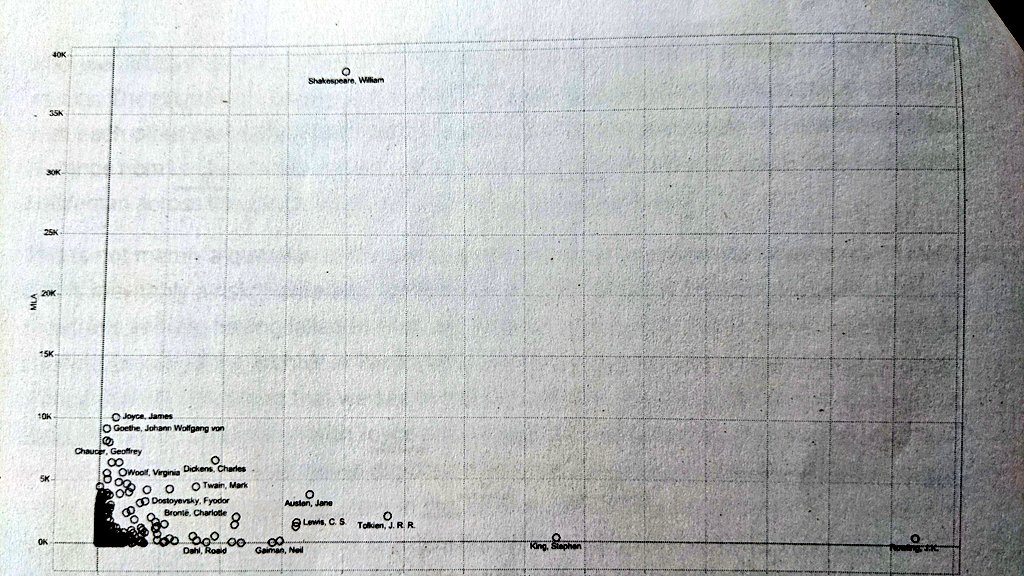
But check it out: all those graphs are log-scaled, meaning each tick on the graph is an order of magnitude. If you try to graph them all on a linear scale, only a few dozen authors escape the singularity. These are the “hypercanon.” Can you find your favorites on here?
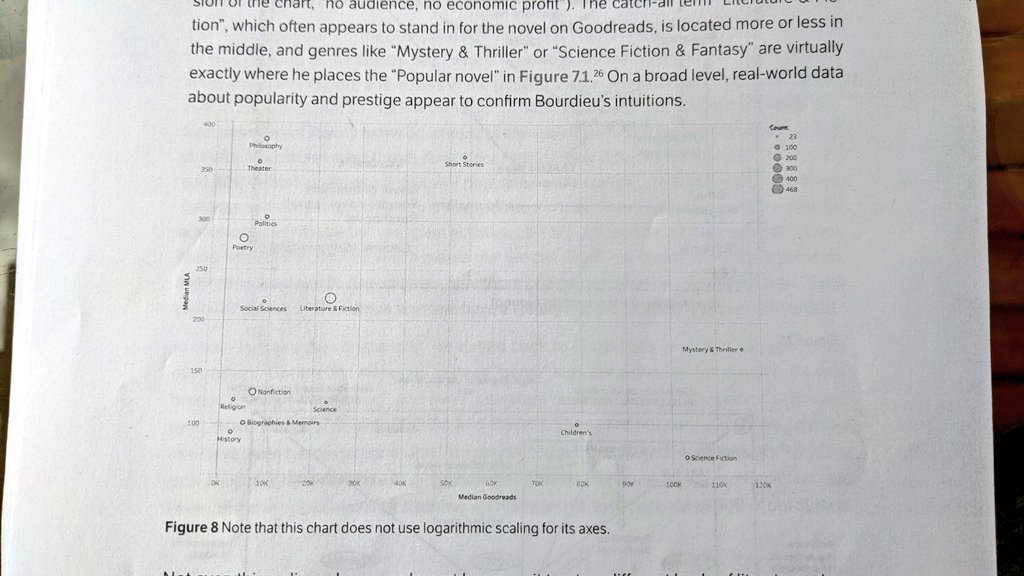
I also like this graph of genre averages. It matches my sense of the terrain of market vs academy:
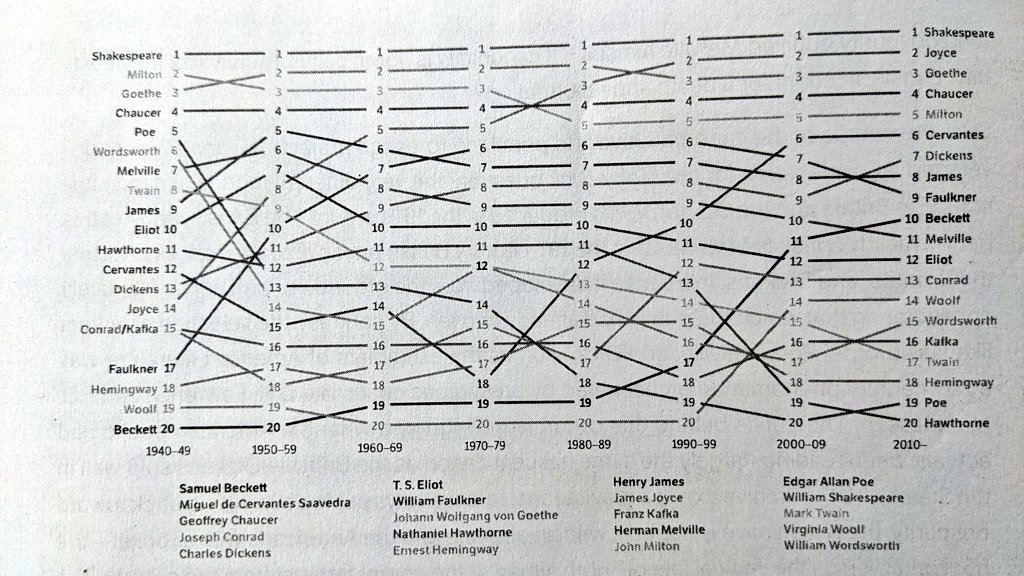
This is the one I stared at the longest though. Top MLA authors, ranked by their MLA popularity over the last few decades. You can literally see the “stock” of a certain author go up or down with time:
[https://x.com/Probably_Brian/status/1396113015540387840?s=19](https://x.com/Probably_Brian/status/1396113015540387840
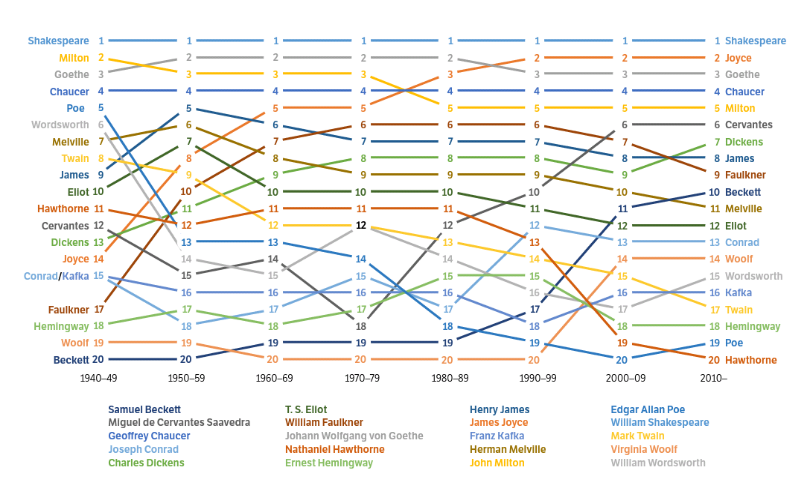 ?s=19)
I’m trapped inside the Earth btw. That’s why I do E on the left and W on the right.